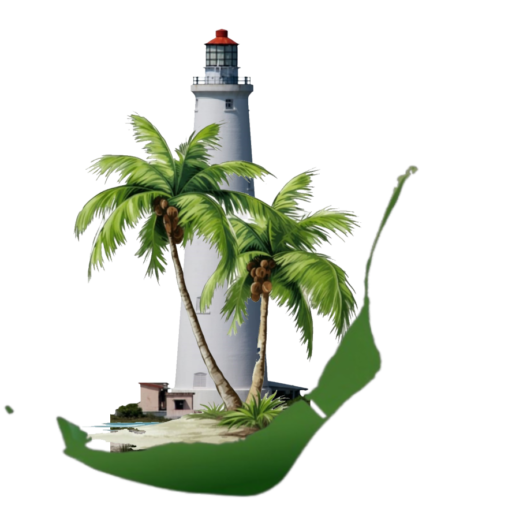

The Living Compass and Guardian of Maliku’s Reef Traditions
Sampagothi Hassan Kaka was one of Maliku’s most respected traditional reef guardians and local pilots. At the southernmost edge of Lakshadweep lies Maliku (Minicoy), a place where the sea is not merely geography, but destiny. Life here flows between the calm rhythms of the Falhu (lagoon) and the vast, unpredictable expanse of the Bodukandu (deep sea). For generations, islanders have depended on an intimate relationship with the ocean—guided not only by winds and stars, but by individuals whose knowledge transcends instruments and charts.
Among them, Sampagothi Hassan Kaka stands as a towering figure—far more than a local pilot. He was a guardian of the reef, a custodian of tradition, an environmental protector, and a living compass whose wisdom shaped the maritime life of Maliku.
The Reef as Living Knowledge
To the people of Maliku, the reef is not merely a barrier of coral and stone—it is alive. It shifts, breathes, and conceals both pathways and dangers. Every coral head and submerged rock carries memory and meaning.
Hassan Kaka possessed an extraordinary understanding of this living landscape. It was said he knew “every stone, alive and dead,” within and beyond the reef. His knowledge was not learned from books, but inherited, experienced, and refined over time. In moments of uncertainty—during rough weather, fading light, or low tide—fishermen trusted his judgment without hesitation. His voice became a compass more reliable than any instrument.
The Sacred Duty of a Local Pilot
In Maliku, the role of a local pilot was never just a profession—it was a sacred responsibility. Navigating vessels safely between the Falhu and the Bodukandu required deep awareness of currents, tides, and hidden reef structures.
In earlier times, Odi—traditional sailing vessels—connected the island with the mainland, carrying passengers, goods, and stories. When these vessels approached Maliku, they depended entirely on local pilots to guide them through the narrow reef passages.
Hassan Kaka, often boarding through Jahadhoani or Odijahaa Dhoani, would secure and guide these vessels with precision and calm authority. Whether taking an Odi out to the open sea or bringing one safely into the lagoon, his leadership ensured safe passage through some of the most challenging waters.
Authority Rooted in Ecological Wisdom
Hassan Kaka’s influence extended far beyond navigation. Within the fishing community, he held a unique and deeply respected authority—especially in matters concerning the reef’s resources.
One such tradition involved the collection of boadhi, the small bait fish essential for tuna fishing. It was customary that fishermen could collect boadhi only with his permission. This practice was not about control, but about balance—ensuring that marine resources were not overexploited.
Long before modern environmental frameworks, Hassan Kaka practiced a form of ecological governance rooted in tradition, experience, and collective trust.
Maagau: The Big Stone
Hassan Kaka was often identified as Maagau—the “Big Stone.” This title symbolized strength, stability, and leadership. Like a great stone within the reef that withstands currents and guides those around it, he served as an anchor for the fishing community.
His words carried weight, his decisions shaped actions, and his presence provided assurance in uncertain waters.
Keeper of Nerumagu and Chorumagu
The reef passages—Nerumagu and Chorumagu—are lifelines connecting the lagoon to the open sea. Yet they are also constantly shifting and potentially dangerous.
Hassan Kaka took responsibility for proclaiming and organizing the cleaning and maintenance of these vital channels. This was more than a practical task; it was a communal duty that reinforced shared responsibility.
Through his leadership, these pathways remained navigable, protecting both livelihoods and lives.
Kani Jehun: Indigenous Knowledge and Practice
One of the most remarkable traditions of Maliku is Kani Jehun—the erection of poles on growing stones within the reef. These markers help fishermen identify dangerous coral formations, especially during low tide or nighttime fishing.
Each boat owner is entrusted with maintaining one Kani Jehun, creating a system of distributed responsibility that continues year after year, generation after generation. This practice reflects a deep understanding of the reef and an enduring commitment to safety.
Hassan Kaka played a crucial role in sustaining this system. In many ways, Kani Jehun represents an indigenous technology—simple, effective, and deeply rooted in environmental awareness.
A Philosophy of Balance
What distinguished Hassan Kaka was not just his skill, but his philosophy. He understood that the sea cannot be conquered—only respected.
His approach balanced use with preservation. He ensured that fishing practices remained sustainable, that navigation respected the reef, and that knowledge was passed down through generations. In doing so, he created a living system of harmony between people and nature.
Legacy Beyond Time
Even as the era of Odi has faded and modern vessels have taken their place, the legacy of Sampagothi Hassan Kaka continues to endure.
It lives in the careful navigation of fishermen.
It lives in the standing poles of Kani Jehun.
It lives in the maintained pathways of Nerumagu and Chorumagu.
And it lives in the stories passed from elders to the young.
His influence remains embedded in the daily rhythms of Maliku’s maritime life.
Conclusion: The Eternal Navigator of Maliku
Sampagothi Hassan Kaka was more than a man—he was a system of knowledge, a pillar of tradition, and a guardian of ecological balance.
In Maliku, where the sea defines both challenge and survival, his life stands as a powerful reminder: true navigation is not only about guiding vessels, but about guiding a community toward sustainability, respect, and continuity.
He remains, in every sense, the living compass of Maliku—an enduring legend whose legacy continues to guide both sea and society.