
Ibrahim Yusuf Manikfan Boduganduvaru: A Visionary Leader of Maliku
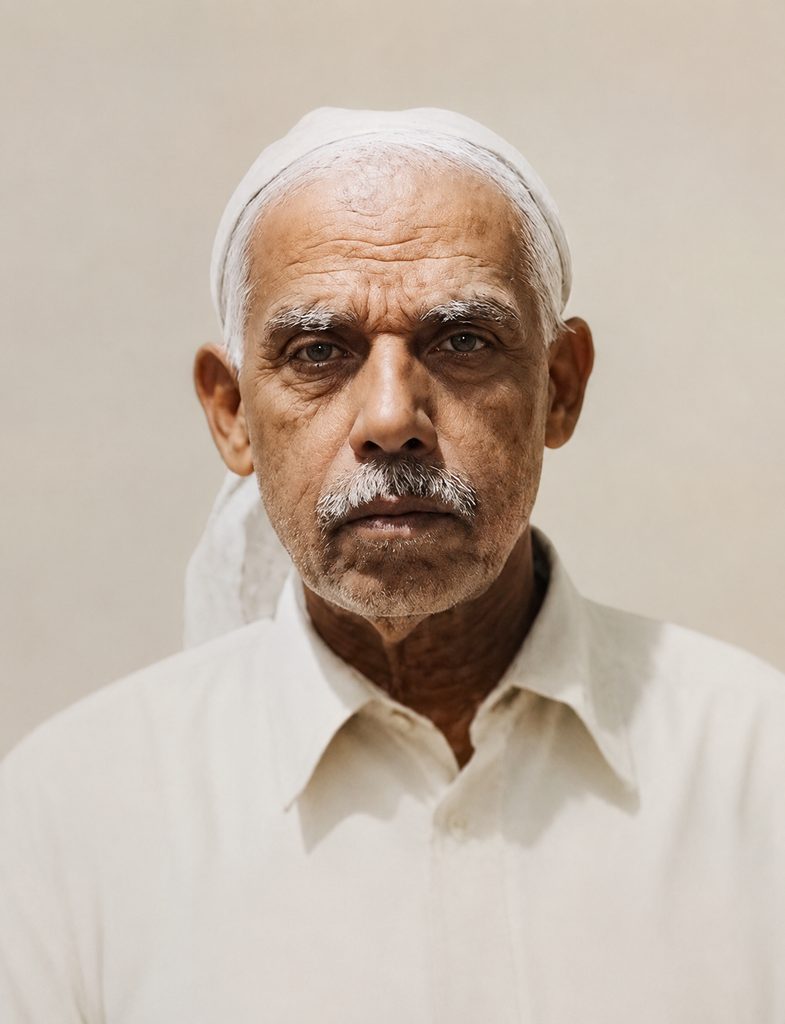
Ibrahim Yusuf Manikfan Boduganduvaru remains an unforgettable figure in the history of Maliku (Minicoy), remembered for his leadership, foresight, commitment to religious education and important role in the development of Baada Village. His life became closely connected with a period of profound religious and social change on the island, and particularly with the work of the distinguished Islamic scholar Sheikh Malingey Hussain Didi(رَحِمَهُ ٱللَّٰهُ).
Ibrahim Yusuf Manikfan was one of the four children of Boduganduvaru Donmanikfan. The siblings were Boduganduvaru Ibrahim Yusuf Manikfan, Boduganduvaru Hassan Manikfan, Boduganduvaru Moosa Manikfan and Boduganduvaru Muhammad Manikfan.
Ibrahim Yusuf Manikfan married Donmanika of Kanakufulhege, and the couple was blessed with six children: Ali Manikfan, Muhammad Manikfan, Amina Manika, Aisha Manika, Moosa Manikfan and Hussain Manikfan.
His descendants and those who remembered him described Ibrahim Yusuf Manikfan as a man of considerable standing, worldly resources and prestige. Kanakifulhege Hassan Manikfan, reflecting on his life, remembered him particularly for his vision and ability to anticipate future challenges and seek practical solutions before difficulties became greater.
Ibrahim Yusuf Manikfan Boduganduvaru played an important role in the religious and community development of Maliku.
A defining chapter in this history was his association with Sheikh Malingey Hussain Didi (رَحِمَهُ ٱللَّٰهُ), one of the most influential Islamic scholars associated with Maliku.
According to the recollections of Muraiduganduvaru Ali Manikfan, Sheikh Malingey Hussain Didi (رَحِمَهُ ٱللَّٰهُ), after studying at Jamia Darussalam, Umarabad, near Vellore in Tamil Nadu, travelled to Beypore. There he met people from Maliku and accompanied them to the island aboard the sailing vessel S.V. Dolphin, owned by Bauge Dhon Manikfan, who was then the Amin of Maliku, and captained by his son Furakkaadu Ali Manikfan.
Sheikh Hussain Didi (رَحِمَهُ ٱللَّٰهُ) first arrived in Maliku in 1937, when he was approximately 23 years old.
During his stay, Hussain Didi (رَحِمَهُ ٱللَّٰهُ) conducted classes in Islamic religious education and delivered religious lectures at various places across the island. Many people benefited from his teaching, including a considerable number of women.
His arrival and religious work coincided with a period when several traditional beliefs, ceremonies and social customs were deeply rooted in Maliku. Hussain Didi (رَحِمَهُ ٱللَّٰهُ) spoke openly against practices that he regarded as religious innovations and superstitions. These included beliefs associated with shrines erected around the graves of revered personalities, vows and offerings made at such places, and other customs and gatherings that he considered inconsistent with Islamic teachings.
It was within this broader movement of religious education and reform that Ibrahim Yusuf Manikfan emerged as an important local leader and supporter.
He encouraged the spread of Islamic education among the people of Baada and supported efforts to provide organised religious instruction. Madhrasathul Islamiyya was established to provide religious education to the people of the community, while Sheikh Hussain Didi’s scholarship and teaching contributed greatly to the growth of religious awareness.
The association between the two men brought together two different but complementary strengths: Ibrahim Yusuf Manikfan provided local leadership, organisation, encouragement and community support, while Sheikh Hussain Didi (رَحِمَهُ ٱللَّٰهُ) contributed scholarly knowledge, religious instruction and teaching.
This period, however, was not without opposition.
Hussain Didi’s outspoken criticism of practices that he considered contrary to Islamic teachings gradually created hostility among some influential sections of the island community.
The tension reached a serious point on the night of 14 October 1941, corresponding to 23 Ramadan 1360 AH, when Hussain Didi (رَحِمَهُ ٱللَّٰهُ) was delivering a religious talk in the courtyard of Muraiduganduvaru. A hostile group arrived and stones were thrown. During the disturbance, the high boundary wall of Muraiduganduvaru was brought down.
Hussain Didi(رَحِمَهُ ٱللَّٰهُ) himself escaped injury and was protected by his supporters in a neighbouring compound.
Following the incident, circumstances made it difficult for him to remain in Maliku. He therefore left the island on the earliest available vessel and is believed to have subsequently travelled to the Maldives.
The years following Hussain Didi’s departure witnessed further important developments in Baada.
Ibrahim Yusuf Manikfan converted the Baada varhaange—a women’s community house used mainly for coir-rope making—into a mosque, and separate Friday prayers began to be conducted there.
This was an important turning point in the religious history of Baada, but it also contributed to disagreement between sections of the community. For a period, differences surrounding religious practice and the separate Friday congregation created divisions between people in different parts of Maliku.
It is important, however, to distinguish carefully the historical roles of Ibrahim Yusuf Manikfan and Sheikh Hussain Didi.
According to the narration of Muraiduganduvaru Ali Manikfan, Sheikh Malingey Hussain Didi (رَحِمَهُ ٱللَّٰهُ) had no role in creating the division associated with the establishment of the separate Friday prayer in Baada.
This development occurred after Hussain Didi’s earlier departure from Maliku.
In time, efforts were made to overcome the differences that had arisen. The two Katheebs of Maliku reconciled and worked towards reducing hostility between the northern and southern communities, strengthening friendship and addressing religious practices that they regarded as innovations.
Meanwhile, Sheikh Hussain Didi (رَحِمَهُ ٱللَّٰهُ) eventually settled in Parappanangadi, Kerala, where he served as Imam of the Mujahid Mosque and continued his religious and scholarly work.
It was during this period that the association between Ibrahim Yusuf Manikfan and Sheikh Hussain Didi (رَحِمَهُ ٱللَّٰهُ) produced one of its most enduring contributions to Islamic scholarship in the Dhivehi language.
At the request of Boduganduvaru Ibrahim Yusuf Manikfan, founder of the Juma Masjid in Baada Village, Sheikh Hussain Didi (رَحِمَهُ ٱللَّٰهُ) undertook the major scholarly task of preparing a Dhivehi translation and commentary of the Holy Qur'an.
The first volume was published on 10 Rabi' al-Awwal 1378 AH, corresponding to 23 September 1958, and the final volume was published in 1381 AH / 1962 CE. The expenses for printing this important work were borne by the Baada community of Maliku.
This achievement represents an especially significant aspect of Ibrahim Yusuf Manikfan’s legacy.
By recognising the importance of making Qur'anic knowledge accessible to Dhivehi-speaking people and encouraging a learned scholar to undertake such a demanding task, Ibrahim Yusuf Manikfan helped create the circumstances in which an important work of Islamic scholarship could be made available to the community.
The accomplishment itself was the scholarly work of Sheikh Malingey Hussain Didi (رَحِمَهُ ٱللَّٰهُ), while Ibrahim Yusuf Manikfan’s contribution lay in his vision, encouragement and support for the undertaking, together with the financial support provided by the Baada community.
By 1958, attitudes towards Sheikh Hussain Didi (رَحِمَهُ ٱللَّٰهُ) in Maliku had changed considerably.
The Moopans, or traditional village chiefs, representing the villages of Maliku, collectively approached the Lakshadweep Administration seeking permission for Hussain Didi (رَحِمَهُ ٱللَّٰهُ) to return to the island. They wanted the people of Maliku once again to benefit from his religious knowledge.
The Administrator of Lakshadweep, Mr. Murkot Ramunny, granted the required permission.
Upon his return, Hussain Didi (رَحِمَهُ ٱللَّٰهُ) initially stayed at the house of the wife of the Katheeb of Baada Village. Later, a separate house was provided for him in Baada.
His return marked a remarkable transformation from the hostility he had experienced years earlier.
By this time, Sheikh Hussain Didi (رَحِمَهُ ٱللَّٰهُ) had become widely respected and loved among the people of Maliku. His knowledge, character and religious service were appreciated by communities in both the northern and southern parts of the island.
In a powerful expression of reconciliation, Hussain Didi (رَحِمَهُ ٱللَّٰهُ) served as Imam at both Juma mosques of Maliku, leading the Friday prayer alternately—one week at one mosque and the following week at the other.
Ibrahim Yusuf Manikfan Boduganduvaru continued his efforts to strengthen religious education and community life in Maliku. His role during this period extended beyond religious instruction. He became an important figure in strengthening reconciliation and unity after years of disagreement.
His influence reached different levels of the community. The Tahsildar of Maliku respected him and personally attended the adult classes conducted by Hussain Didi (رَحِمَهُ ٱللَّٰهُ). During this period, Hussain Didi also delivered a memorable speech during the Indian Independence Day celebrations.
His increasing acceptance throughout the island represented an important moment in Maliku’s religious history: a scholar who had once been forced to leave amid hostility had returned years later to teach and lead prayers among communities on both sides of the earlier division.
In 1959, however, Hussain Didi’s residence in Maliku once again came to an unexpected end.
He had decided to marry Havva Manika of Kanakufulege, who was the sister of Ibrahim Yusuf Manikfan’s wife. Since Hussain Didi (رَحِمَهُ ٱللَّٰهُ) was a Maldivian national residing in Maliku under special permission, the proposed marriage was referred to the Tahsildar.
According to Ali Manikfan’s narration, the Tahsildar advised that the marriage be postponed until permission could be obtained from the Administrator. The marriage was nevertheless solemnised by members of the Baada community before the required administrative approval was received.
Consequently, Hussain Didi’s permission to remain in Maliku was revoked for non-compliance with the administrative instruction, and he was required to leave the island for the second time.
Hussain Didi (رَحِمَهُ ٱللَّٰهُ) and his wife thereafter settled in Parappanangadi, where he continued his religious and scholarly life.
The association between Boduganduvaru Ibrahim Yusuf Manikfan and Sheikh Malingey Hussain Didi (رَحِمَهُ ٱللَّٰهُ) therefore represents an important chapter in the religious history of Maliku.
Their respective contributions should be remembered with clarity.
Ibrahim Yusuf Manikfan was a visionary community leader, organiser and supporter of religious education and reform. Sheikh Malingey Hussain Didi (رَحِمَهُ ٱللَّٰهُ) was the distinguished Islamic scholar, teacher, preacher and translator whose knowledge and teaching profoundly influenced Maliku.
Ibrahim Yusuf Manikfan’s contribution was not simply that of an individual participating in the religious changes of his time. His importance lay in his ability to organise, support and establish institutions through which those ideas could take root within the community.
His role in the development of Baada Village, his support for Madhrasathul Islamiyya, his establishment of the mosque from the former varhaange, and his encouragement of Islamic education all became part of his enduring legacy.
Equally significant was his recognition of scholarship.
His request to Sheikh Hussain Didi to undertake the Dhivehi translation and commentary of the Holy Qur'an demonstrated a concern not only for the religious life of his own generation but also for making Islamic knowledge available to future generations of Dhivehi-speaking people.
The history of Ibrahim Yusuf Manikfan is therefore inseparable from a wider chapter in Maliku’s transformation—a period marked by religious learning and reform, disagreement and division, and ultimately efforts towards reconciliation and unity.
His close association with Sheikh Malingey Hussain Didi (رَحِمَهُ ٱللَّٰهُ) remains one of the most significant parts of that story. One provided scholarship and religious instruction; the other provided leadership, encouragement and the community foundation through which important religious initiatives could develop.
Together, their intertwined histories became part of the religious and intellectual heritage of Maliku.
Boduganduvaru Ibrahim Yusuf Manikfan is remembered as a man of foresight, leadership and determination whose contributions to Baada Village, religious education and community development left a lasting imprint on the history of Maliku.
May Allah accept his good deeds and services to the community, forgive his shortcomings, and grant him the blessings of Jannah. Aameen.
Historical Source Note
This account of Boduganduvaru Ibrahim Yusuf Manikfan has been prepared from the family and historical information preserved in the original biographical record, together with the detailed narration of Muraiduganduvaru Ali Manikfan concerning Sheikh Malingey Hussain Didi (رَحِمَهُ ٱللَّٰهُ) and the religious developments in Maliku during this period.
Where the earlier account of Ibrahim Yusuf Manikfan differed from the more detailed narration concerning Sheikh Hussain Didi (رَحِمَهُ ٱللَّٰهُ), the events relating specifically to Hussain Didi (رَحِمَهُ ٱللَّٰهُ) have been presented in accordance with the detailed biographical account of Sheikh Malingey Hussain Didi (رَحِمَهُ ٱللَّٰهُ), particularly regarding his first arrival in Maliku, the events of 1941, the development of the separate Friday congregation in Baada, his return in 1958, his role as Imam of both Juma mosques, the Qur'an translation and commentary, and the circumstances of his departure in 1959.
This distinction is maintained so that the individual contributions of Ibrahim Yusuf Manikfan and Sheikh Malingey Hussain Didi (رَحِمَهُ ٱللَّٰهُ) may be preserved as accurately and respectfully as possible within the historical record.
Maliku Legends is honoured to preserve this account as part of the religious, social and community history of Maliku.