
A Scholar, Reformer, Teacher and a Voice for Unity in Maliku
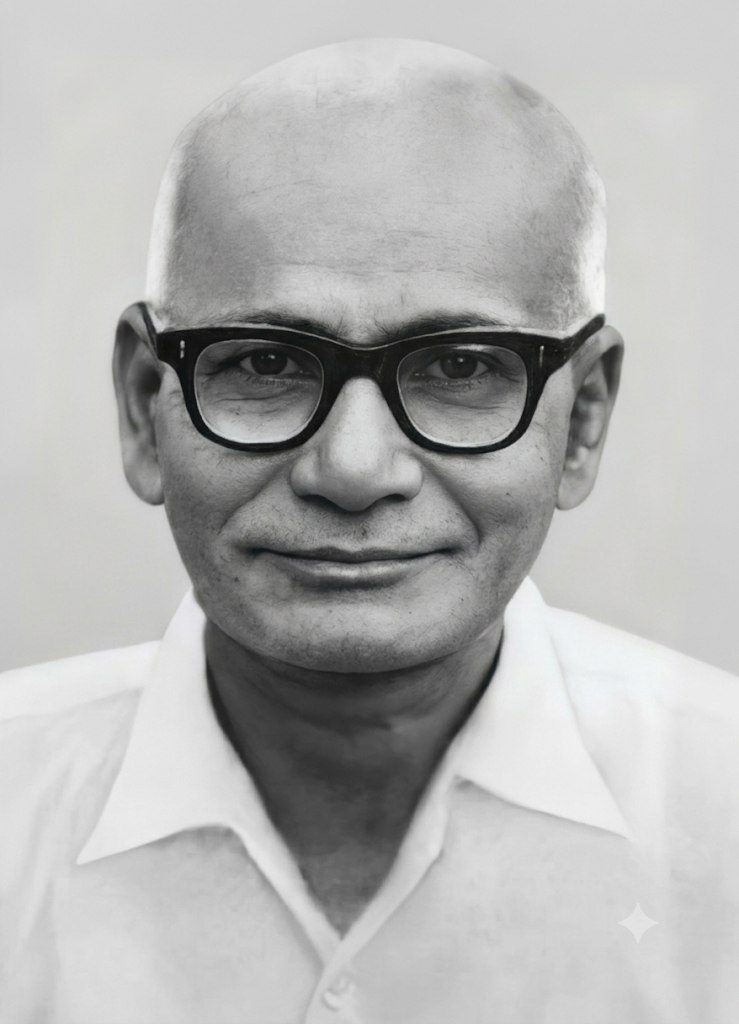
The following account of Sheikh Malingey Hussain Didi (رَحِمَهُ ٱللَّٰهُ), his association with Maliku, and his religious, educational and scholarly contributions is based primarily on the recollections and narration of Muraiduganduvaru Ali Manikfan.
Sheikh Malingey Hussain Didi (رَحِمَهُ ٱللَّٰهُ) occupies a significant place in the religious and social history of Maliku (Minicoy). A learned scholar, teacher, preacher and translator, his association with the island extended across several important decades of religious and social change. His teachings influenced many people, while his firm stand against practices that he considered contrary to Islamic teachings at times brought him into conflict with sections of the island community.
After pursuing his religious studies at Jamia Darussalam, Umarabad, near Vellore in Tamil Nadu, and at Madrasatul Nizamiyat Usmaniyya, Hyderabad, India, Malingey Hussain Didi (R.H.) travelled to Beypore, the historic port town situated at the mouth of the Chaliyar River near Calicut. Beypore was then an important maritime centre frequented by vessels travelling between the Indian mainland, the Maldives and Maliku. Across the Chaliyar lies the old settlement of Chaliyam, while farther along the Malabar coast is Parappanangadi—a place that would later become closely associated with the final decades of Hussain Didi’s life.
Historical Document: View Original Religious Education Certificate →
While at Beypore, Hussain Didi (رَحِمَهُ ٱللَّٰهُ) met a group of people from Maliku and accompanied them to the island aboard the sailing vessel S.V. Dolphin. The vessel belonged to Baugey Dhon Manikfan, who was then the Amin of Maliku, and was captained by his son, Furakkaadu Ali Manikfan.
According to Ali Manikfan’s account, Malingey Hussain Didi (رَحِمَهُ ٱللَّٰهُ) first arrived in Maliku in 1937, when he was approximately 23 years old.
Ali Manikfan, who was born on 16 March 1938, recalled that his own father was appointed Amin of Maliku in the same year. During Hussain Didi’s stay on the island, he began conducting classes in Islamic religious education. These classes attracted many students and had a lasting influence on those who attended them. A considerable number of his students were women, and Ali Manikfan’s mother was among those who studied under him.
Hussain Didi (رَحِمَهُ ٱللَّٰهُ) also delivered religious lectures at different places throughout Maliku. Although he spent considerable time on the island, he occasionally travelled to the Indian mainland. On one such journey, Ali Manikfan’s paternal uncle, Boduganduvaru Hassan Manikfan, accompanied him aboard the S.V. Kotiya Safina, of which Hassan Manikfan was the captain. Ali Manikfan remembered that travel between Maliku and the mainland during those years was far less restricted than it became in later times.
Hussain Didi’s preaching took place during a period when a number of traditional beliefs and social customs were deeply rooted in the community. According to Ali Manikfan’s narration, Hussain Didi strongly criticised practices that he regarded as religious innovations and superstitions. These included beliefs associated with shrines erected around the graves of revered religious figures, the making of vows and offerings at such places, and the belief that the spiritual blessings of holy personalities could protect vessels and seafarers during dangerous conditions at sea.
He also spoke against certain social gatherings where, in his view, conduct inconsistent with Islamic principles had become common.
His outspoken preaching gradually created opposition among some influential people in Maliku. The disagreement eventually reached a serious point on the night of 14 October 1941, corresponding to 23 Ramadan 1360 AH.
Ali Manikfan recalled that Hussain Didi (رَحِمَهُ ٱللَّٰهُ) was delivering a religious talk in the courtyard of his family home, Muraiduganduvaru, when a hostile group arrived and stones were thrown. During the disturbance, the high and lengthy boundary wall of Muraiduganduvaru was brought down. Hussain Didi himself escaped injury. He moved into the courtyard of the neighbouring house, where supporters protected him.
Following the incident, circumstances made it difficult for him to remain in Maliku, and he left the island on the earliest available vessel. It is believed that he subsequently travelled to the Maldives.
According to sources cited in Ali Manikfan’s narration, Hussain Didi (رَحِمَهُ ٱللَّٰهُ) and two companions later left the Maldives in 1954, travelling by boat to Trivandrum and thereafter proceeding to Parappanangadi in Kerala. His stay there was facilitated by K. P. H. Mohammed Naha, a member of the Naha family of Malabar who had studied with Hussain Didi at Umarabad.
Malingey Hussain Didi (رَحِمَهُ ٱللَّٰهُ) himself traced his ancestry to the Naha lineage of Malabar. The family tradition connects this lineage with the Ba'Alawi Sayyids of Hadramaut in Yemen and with generations of prominent personalities who later became associated with the Maldives.
According to the genealogical account preserved in the narration, Sayyid Mohamed Naha Al-Malabari, also known as Holhi Naha, belonging to the Naha clan of Malabar, travelled to the island of Fasmandhoo in North Maalhosmadulu Atoll in the Maldives. He married a woman from that island, and they had a son named Hassan Thakurufan, who later became a minister of the King of the Maldives and was known as Hassan Hakuraa Thakurufan.
The genealogy recorded for Malingey Hussain Didi (رَحِمَهُ ٱللَّٰهُ) traces him as the son of Malingey Moosa Didi, son of Malingey Ahmed Didi, son of Ali Didi, known as Ali Malin Manikfan, a chief religious leader of the Government of the Maldives; son of Veeru Hassan Didi; son of Veeru Ibrahim Didi; son of Ali Didi, known as Ali Dhorhimena Manikfan, a minister of the King of the Maldives; son of Holhi Hakuraa Manikfan, also a minister of the King of the Maldives; who was descended from the above-mentioned Hassan Hakuraa Thakurufan.
The Naha clan of Malabar is traditionally described as descending from a Nakhda of the Shaqqaf clan, belonging to the Ba'Alawi Sayyid tradition of Hadramaut in Yemen, who came to Malabar and married a Malabar woman.
After settling at Parappanangadi, Hussain Didi (رَحِمَهُ ٱللَّٰهُ) was provided with land on which to establish his residence. He served there as Imam of the Mujahid Mosque and continued his scholarly and religious work.
It was during this period that one of his most important literary contributions began.
At the request of Boduganduvaru Ibrahim Yusuf Manikfan, founder of the Juma Masjid in Baada Village, Maliku, Hussain Didi (رَحِمَهُ ٱللَّٰهُ) undertook the major task of preparing a Dhivehi translation and commentary of the Holy Qur'an.
The first volume was published on 10 Rabi' al-Awwal 1378 AH, corresponding to 23 September 1958, and the final volume was published in 1381 AH / 1962 CE. According to the account, the expenses for printing this important work were borne by the Baada community of Maliku.
The years following Hussain Didi’s earlier departure had meanwhile witnessed significant religious developments within Maliku. Boduganduvaru Ibrahim Yusuf Manikfan converted the varhaange, a women’s community house used mainly for coir-rope making in Baada Village, into a mosque, where separate Friday prayers began to be conducted.
This development contributed to disagreement between sections of the community and, for a period, created serious divisions between people in different parts of Maliku. Ali Manikfan was careful to emphasise in his narration that Malingey Hussain Didi (رَحِمَهُ ٱللَّٰهُ) had no role in creating this division.
In time, efforts were made to overcome these differences. The two Katheebs of Maliku reconciled and worked towards reducing hostility between the northern and southern communities, strengthening friendship and addressing religious practices that they considered innovations.
By 1958, attitudes towards Hussain Didi had changed considerably. The Moopans, or traditional village chiefs, representing the villages of Maliku collectively requested permission from the Lakshadweep Administration for him to return to the island. They wished for the community once again to benefit from his religious knowledge.
The Administrator of Lakshadweep, Mr. Murkot Ramunny, granted the required permission.
Ali Manikfan, who was then serving as secretary to the Amin of Maliku, recalled having a close relationship with Hussain Didi (رَحِمَهُ ٱللَّٰهُ). On one occasion, the two travelled together from the mainland to Maliku.
Upon his return, Hussain Didi initially stayed at the house of the wife of the Katheeb of Baada Village. Later, a separate house was provided for him in Baada.
This second period of his life in Maliku was very different from the hostility he had experienced years earlier.
Hussain Didi (رَحِمَهُ ٱللَّٰهُ) had by then become widely respected among the people. His knowledge, character and religious service earned him affection across the island, and he was welcomed by communities in both the northern and southern parts of Maliku.
In a remarkable expression of reconciliation, he served as Imam at both Juma mosques of Maliku, leading the Friday prayer alternately—one week at one mosque and the following week at the other. His role thus extended beyond religious instruction; he became an important figure in restoring unity after a period of division.
Ali Manikfan also recalled Hussain Didi’s balanced approach to differences in religious practice. Although Hussain Didi himself did not regularly recite Qunut in a particular congregational prayer, he did not prevent others from reciting it. Such an approach helped him gain respect among people with differing practices.
His influence extended beyond the ordinary congregation. The Tahsildar of Maliku respected him and personally attended the classes Hussain Didi conducted for adults. During that period, Hussain Didi also delivered a memorable speech at the island’s Indian Independence Day celebrations.
Ali Manikfan remembered his contribution during these years especially for the valuable role he played in encouraging reconciliation, friendship and unity among the people of Maliku.
However, in 1959, Hussain Didi’s residence on the island once again came to an unexpected end.
He had decided to marry Hawwa Manika of Kanakufulege, who was the sister of the wife of Boduganduvaru Ibrahim Yusuf Manikfan. Because Hussain Didi was a Maldivian national residing in Maliku under special permission, the proposed marriage was referred to the Tahsildar.
According to the narration, the Tahsildar advised that the marriage be postponed until permission could be obtained from the Administrator. The marriage was nevertheless solemnised by members of the Baada community before that approval was received.
Consequently, Hussain Didi’s special permission to remain in Maliku was revoked for non-compliance with the administrative instruction, and he was required to leave the island for the second time.
Hussain Didi (رَحِمَهُ ٱللَّٰهُ) and his wife, Hawwa Manika of Kanakufulege, thereafter settled in Parappanangadi, Kerala, where he continued his religious and scholarly life.
Their marriage was blessed with two sons, Nahid Hussain Didi and Abdul Rasak Hussain Didi. Both sons continue to live in Parappanangadi, Kerala, where their father spent the later years of his life and continued his religious and scholarly service.
His intellectual contribution was not limited to his Dhivehi translation and commentary of the Holy Qur'an. According to Ali Manikfan’s account, Hussain Didi also translated Sahih al-Bukhari and Sahih Muslim into Dhivehi. Tragically, these manuscripts were never printed and were later destroyed by termites. As a result, no surviving copies are known from the account.
Malingey Hussain Didi (رَحِمَهُ ٱللَّٰهُ) passed away on 25 December 1979, at approximately 65 or 66 years of age. He was laid to rest in the cemetery of the Juma Masjid at Parappanangadi.
His relationship with Maliku was marked by periods of acceptance and opposition, departure and return. Yet his enduring legacy rests in his commitment to religious education, scholarship, the dissemination of Islamic knowledge in the Dhivehi language, and particularly his later efforts to bring people together after years of disagreement.
The story narrated by Ali Manikfan presents Hussain Didi not merely as a visiting religious scholar, but as a man whose life became closely intertwined with an important period in Maliku’s religious and social history. From the young scholar who first reached the island aboard the S.V. Dolphin in 1937 to the respected teacher who later led prayers in both of Maliku’s Juma mosques, his journey reflects scholarship, perseverance, reconciliation and service.
His contribution to Islamic learning in the Dhivehi language, particularly his translation and commentary of the Holy Qur'an, remains an important part of his scholarly legacy. His years in Maliku also remain part of the island’s collective memory—a history of religious learning, disagreement, reconciliation and, ultimately, a renewed effort towards unity.
May Allah forgive Sheikh Malingey Hussain Didi (رَحِمَهُ ٱللَّٰهُ), accept his knowledge, teachings and good deeds as continuing charity, and grant him the highest blessings of Jannah. Aameen.
Source, Narration & Publication Note
This biographical account of Sheikh Malingey Hussain Didi (رَحِمَهُ ٱللَّٰهُ) has been prepared primarily from the narration and recollections of Muraiduganduvaru Ali Manikfan, particularly concerning Hussain Didi’s association with Maliku, his religious and educational activities, and the events witnessed or remembered by Ali Manikfan.
The publication of this account on the Maliku Legends website has been made with the kind permission and consent of Mr. Nahid Hussain Didi, son of Sheikh Malingey Hussain Didi (رَحِمَهُ ٱللَّٰهُ), who graciously permitted us to preserve and share this valuable historical account for the benefit of present and future generations.
Maliku Legends expresses its sincere gratitude to Mr. Nahid Hussain Didi for granting permission to publish this important record of his father’s life, scholarship and contributions, and respectfully acknowledges the family of Sheikh Malingey Hussain Didi (رَحِمَهُ ٱللَّٰهُ) for helping preserve the memory and legacy of this distinguished scholar.
As this account contains personal recollections, family genealogy and descriptions of historical events, certain details should be understood within the context of the narrated historical record and the memories through which they have been preserved.
Maliku Legends is honoured to preserve this account as part of the documented religious, social and intellectual heritage of Maliku.